Showing posts with label vintage fashion. Show all posts

Thursday, August 7, 2014

Real People, Real Vintage

VFG member Maggie from DeniseBrain.com 

A while ago I was watching re-runs of Hemlock Grove, a deliciously dark, supernatural soap-esque TV series. The show is set in modern times but in one of the episodes I noticed that upir (Ukranian Vampire), Olivia Godfrey, had on a heart stopping, vintage coat which looked a LOT like Courrèges. To my delight, Olivia's entire first season wardrobe seemed to be peppered with fabulous vintage. It's exciting to me, when vintage is a fashion choice of film and TV costumers and I love reports of vintage sightings in high society or the Hollywood crowd. But, my vintage radar is on high wherever I go and I mostly love seeing it worn by real everyday people.

The other day there was a discussion among my fellow trade members on the Vintage Fashion Guild, about house dresses, the kind our mothers and grandmothers wore to tend family and home. A number of members shared their own preferences for these pretty but practical frocks. Some dressed them up for special occasions and others simply wore them as they were intended, to work around the house or garden.

This got me to thinking about how real people choose to wear real vintage. I put a shout out to my VFG friends and asked if they might share pictures of themselves showing off their own unique vintage style. I got a great response and here goes... Real people wearing real vintage.


Alice from  EndlessAlly on Etsy

 In a Mid 60s - early 70s Abe Schrader ensemble. Coat has back belt and velvet collar. "It's my early fall gallery hop favorite!" says Alice


Amy from VivaVintage.com

1. A 1970s acrylic knit sweater dress, short 1960s wool cape, accessorized with a 1940s black plastic cameo pin and a mid century(Christian Dior) hat.
 2. 1970s snap-front corduroy coat, 1940s wide-brim straw hat and 1960s leather purse with modern leather gloves and scarf.


Amber from TheVintageVortex on Etsy 

1. Wearing a black and white 1960's maxi dress at the Don the Beachcomber tiki bar in Sunset/Huntington Beach. 
2. Amber's hubby in one of his vintage Hawaiian shirts. 


Barbara from RueDeLaPaixHats.com  

Under a shady tree wearing a mix of old and new. Antique hat, circa 1919, Edwardian french purse, shoes are 1990s Edwardian revivals and antique brooch.  The green 2 piece suit is a custom made copy of a WWI era suit.


Suzanne from AnotherTimeVintageApparel.com

 Modern vintage look gown. 1950s Hattie Carnegie ruby and hematite necklace. Gold Victorian bangle bracelet, 1950s black gloves and not seen, beaded 40s bag and red and black suede 50s Springolator shoes.


 Bonnie from MyVintageClothesLine on Ruby Lane 

All in 1940s attire. Black Wool Suit, Elizabeth Hawes hat, black wool purse and Joseff of Hollywood Brooch


Carrie from Cur.ioVintage.com 

Formal night photo from her Mediterranean cruise, 1940s rayon gown. "I'm wearing vintage jewelry too, though you can't see it!" says Carrie 


Harriet from TastyVintage.com

 1. A ww1 nurses dress over a 90s gap tshir
 2. With a friend at a vintage show wearing a psychedelic jumpsuit  


                   Joules from JoulesVintage on Etsy 

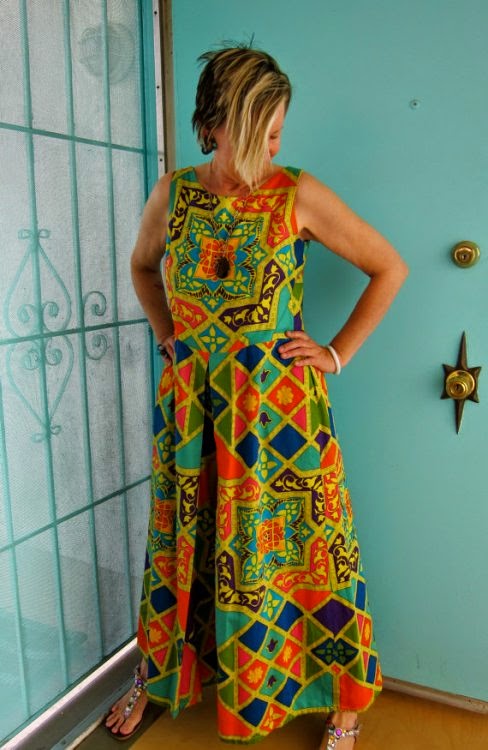
                1. Wearing an 80s jumpsuit
                2. In a 1960s palazzo jumpsuit


Liza from BetterDressesVintage.com 

1. Off to a fundraiser in a 50s-themed dance production. Everything vintage but the shoes
2.Liza's customer Nicole in a dropped waist 60s dress


 Maggie from DeniseBrain.com 

1. With a friend in 30s/40s attire
2. Mod vintage coat and umbrella


Mary Jane from Poppy'sVintageClothing.com 

MJ says "Here is an old photo of myself back in the 70s in my first vintage shop with my mentor/partner, Alma"

MJ on right in a 40s silk day dresses. Alma wearing Bakelite bangles on and amber pendant


Melanie from StellaRoseVintage on Etsy with twin sister Heather

1. Heather wearing a 1970s Kimono style robe/dressing gown for a day out shopping
2. Heather in 80s St Michael shorts and crop top
3. Melanie went as Jessie, to a Disney character themed Fancy Dress, wearing men's 1970s Italian boots, 80's home made line dancing blouse and 90's Etam cord waistcoat. Plus her Dad's hat
4. and 5. 1980 Tootal tie worn as a headscarf:


Nicole from CircaVintage.com.au

1.Nicole and friends in 1940s/50s vintage
2. In 1930s vintage on her wedding day
3. Wearing 30s printed silk satin


Susan from NorthStarVintage on Etsy

Wearing her beloved 60s Brooks cafe racer jacket with stars painted on the cuffs. 


Karen from WillyNillyVintage on Etsy

1. Vintage slip and handbag with modern jeands and cardigan.
2. 1950s cotton play suit with modern belt and heels.
3. 1960s Courrèges raincoat with vintage scarf bag and Bally boots.
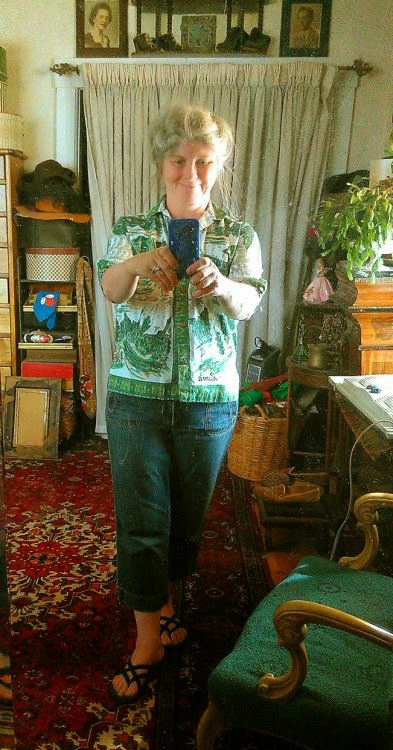


And... me in my favorite 1960s cotton print cropped shirt

Thank you to all of my friends and colleagues at the Vintage Fashion guild!!

Tuesday, August 27, 2013

The Man behind the Fashion History Museum


As a trade member of the Vintage Fashion Guild I am part of a large community of vintage fashion professionals. All our members are passionate about vintage and work hard to maintain integrity in our businesses.  We are constantly fact checking the history of our merchandise to make sure our goods are properly represented. Whenever we are stumped about something we turn to each other for answers and 99% of the time someone is able to help. Jonathan Walford is a long time VFG member and one of our most knowledgeable. He is always generous with information and never ceases to amaze me. He has written a number of books (which I highly recommend) on vintage fashion and recently opened the Fashion History Museum in Ontario, Canada. I asked Jonathan if he would agree to an interview for my blog so you could all meet the man behind the museum and hear his story.
 
-When did your passion for the history of fashion and textiles begin? Did you begin as a collector or a historian?
 
My fascination with historical dress began when I was a kid. My favourite movies were historically set films like: Chitty Chitty Bang Bang, The Great Race, and Thoroughly Modern Millie. I remember crying myself to sleep because my parents wouldn’t let me stay up to watch the Six Wives of Henry VIII on TV, I must have been ten at the time. I began collecting soon after I started working at a museum called Heritage Village in Burnaby, B.C. in the summer of 1977. I was given a collarless shirt to wear as my costume and I figured I could do better than that and began combing the vintage clothing stores of Gastown (the old heritage district of Vancouver) for starched collars, knitted ties, and straw boaters. By the end of the year I was receiving gifts from friends and family members and putting most of my paycheque into buying the oldest pieces of antique clothing I could find. My first dress purchase was a black net dress from the mid 1890s.
 
-Tell us a little about your journey in the field and how it evolved over time.
 
When I began collecting, vintage clothing stores were still being run by Hippies who had started their shops in the late 1960s. By 1980 the Punks and New Wavers were buying old clothes and the stock in vintage shops shifted from Edwardian underwear and 30s chiffons to 1950s prom dresses, stiletto-heeled shoes, and leather motorcycle jackets.
I used my collection for producing lectures and fashion shows in the 80s and 90s as a sideline to my museum career. In 1987 I landed the curatorial job for the Bata Shoe Museum collection in Toronto. The museum was not yet open to the public and its collection was held in the basement of the Bata shoe company headquarters. With the help of a healthy acquisitions budget, I was able to transform that collection into the internationally important institution the Bata Shoe Museum has become today. In 1999 I had done all I could at Bata and it was time to move on. As a freelance curator I phased out my fashion shows and instead began creating travelling exhibitions for museums. My first exhibition of 1960s paper dresses debuted in Montreal in the summer of 2001. In 2004 my partner Kenn was taking a leadership course and took the idea of creating a fashion museum as a project for his course. By the end of that year we had founded the Fashion History Museum. Five years later, in 2009, the museum received its charitable status, which qualified us to offer tax receipts for donations and brought us to the next hurdle – finding a home for the museum.
 
-Your books are beautiful and contain a wellspring of knowledge. They must represent countless hours of painstaking research and appear to be a true labor of love. Could you talk a bit about this?
 
Even though I had written numerous exhibition texts and museum catalogues, I didn’t consider myself a writer. I have no patience for reading fiction and most academic treatises are mind numbingly dull. I love ‘I was there’ memoirs. I want to read what people thought at the time about what they wore and why they thought it was beautiful or ugly. That information comes to us mostly from period accounts, ranging from private diaries to magazine articles. While I was writing the text for the 1960s paper dress exhibition I came across an archive of period news clippings on the topic. The public reaction about paper clothing in the 1960s ran the gamut from ‘innovative wave of the future’ to ‘the stupidest fashion ever invented.’ I turned this research into the book ‘Ready to Tear’, which doubled as a catalogue to accompany the same-named exhibition. While looking for a publisher for the catalogue, Thames and Hudson rejected the paper dress book for being intended for too specific a market, but asked if I could write a shoe book instead – something I had wanted to do when I was still at Bata. That turned into a three-book contract: The Seductive Shoe, Forties Fashion, and Shoes A-Z. and I am now on my fourth book: Sixties Fashion, which is coming out this October.
The Internet has made researching these books possible. It would have taken years and endless trips to libraries and archives to find what I can get now in the comfort of my own home. With every passing year the access to obscure publications increases, which makes the books feasible.
 
-The whole concept of creating a museum from scratch simply boggles my mind, yet you and Ken did just that. I am intrigued to learn about your journey from idea to reality in this venture.
 
We originally moved to Cambridge, Ontario in 2007 because a potential site for our museum was available. That plan didn’t pan out but we liked the town and stayed. Three months ago we were given the opportunity of a space to set up the museum that we grabbed because we had to take a leap of faith and show everyone what we can do and how fascinating a fashion history museum can be. Although we had a shoestring budget, we had some devoted volunteers who really put their backs and time into helping us.
There is about 2,500 square feet of exhibition space in three galleries. The building is an old limestone foundry from the mid-late 19th century and is a beautiful piece of Victorian industrial architecture. There are large Eiffel tower-like columns and thick limestone walls that provide the background for the fashions -- it feels grand. The challenge for us was to turn this space, which had been used most recently as a retail store, into a gallery. We hid existing shelving units with large canvas panels, and the landlord allowed us to reuse lumber we scavenged from taking down changing room walls. We transformed the space on less than $5,000, including electrician bills and professional signage. 
 
-Every dream come true has its memorable stories along the way. Unusual encounters…humorous happenings…moments of inspiration or encouragement… perhaps you could share a memory or two with us?
 
Tough question to answer because every day there is something that amazes me – some visitor who has something they want to give us or a story about their fashionable past that is amazing or humorous. I honestly can’t think of any specific story at the moment…
 
-I know absolutely zero about running and managing a museum. What proportion of the collection is generally on display? How often do displays rotate and change. Will you feature “visiting” collections?
 
We manage about 8,000 artifacts and the museum currently has about 200 of them on display. With everything that needed to be done before we opened I had to install some ‘easy’ exhibitions to start with because I didn’t have time for a complicated curatorial text. So we started with our main exhibition looking at paisley and plaid as recurring patterns in fashion. Starting October, this show will be morphed into a timeline history of fashion from 1760 to 2010 that will become a permanent feature of the museum. The clothes within the exhibition will be changed on a regular basis to keep the show fresh and the artifacts in good condition. This guarantees that there will always be something on display that everyone will like as some people like 20th century designer fashions, while others only come to see Victorian clothes. The smallest gallery has a purse anthology and it will be changed to other accessory exhibitions – gloves, hats, shoes etc. because everything in this gallery is in showcases. The middle-sized gallery will be changed on a rotating basis (between 6 and 12 weeks depending upon the sensitivity of the material on display), and feature different topics and approaches to fashion history. We are planning an annual showcase of recent acquisitions called Open Drawers, and have three exhibitions already in the works: Mod Modes – 1960s fashions, for late fall/early winter; ‘To Meet the Queen’, clothes worn to be presented at court or meet royalty, which will open in the new year; and although we haven’t figured out what to do next spring or summer, we have a fall show planned “It Came From Hollywood’, about costume designers who became fashion designers. We will be borrowing from other collections and museums for these three shows but I doubt we will be hiring any travelling exhibitions in the foreseeable future.
 
-Where to from here? Will you continue writing? Are there future plans for the museum?
 
We are in discussion with various people regarding our future and it will take some time before we will know exactly what is happening. In the meantime, it is business as usual and we will continue to travel exhibitions around the world, and I will continue to write books. My next book will be on fashion during the rise of ‘The New Woman 1880-1925 – from tailored suit to the vote’. After that, I would like to work on something more modern. There isn’t a comprehensive book about fashion in the 1970s and 1980s yet… but that will be a few years down the road.
 
-----------------------------------------------------------------------------------

 
c. 1885 printed paisley wool dress, American

 
Acquisitions from the past ten years on show in Fashions for the 
Future including examples by Stephen Sprouse for Target, 2002, and 
Vivienne Tam's Mickey Mouse applique dress from 2007


Paisley printed dresses from the 1950s and 1960s in front of a Kashmiri shawl that was a wedding gift to a bride in Boston in 1858
 

For info on the Fashion History Museum click here.


To purchase books by Jonathan Walford click here.